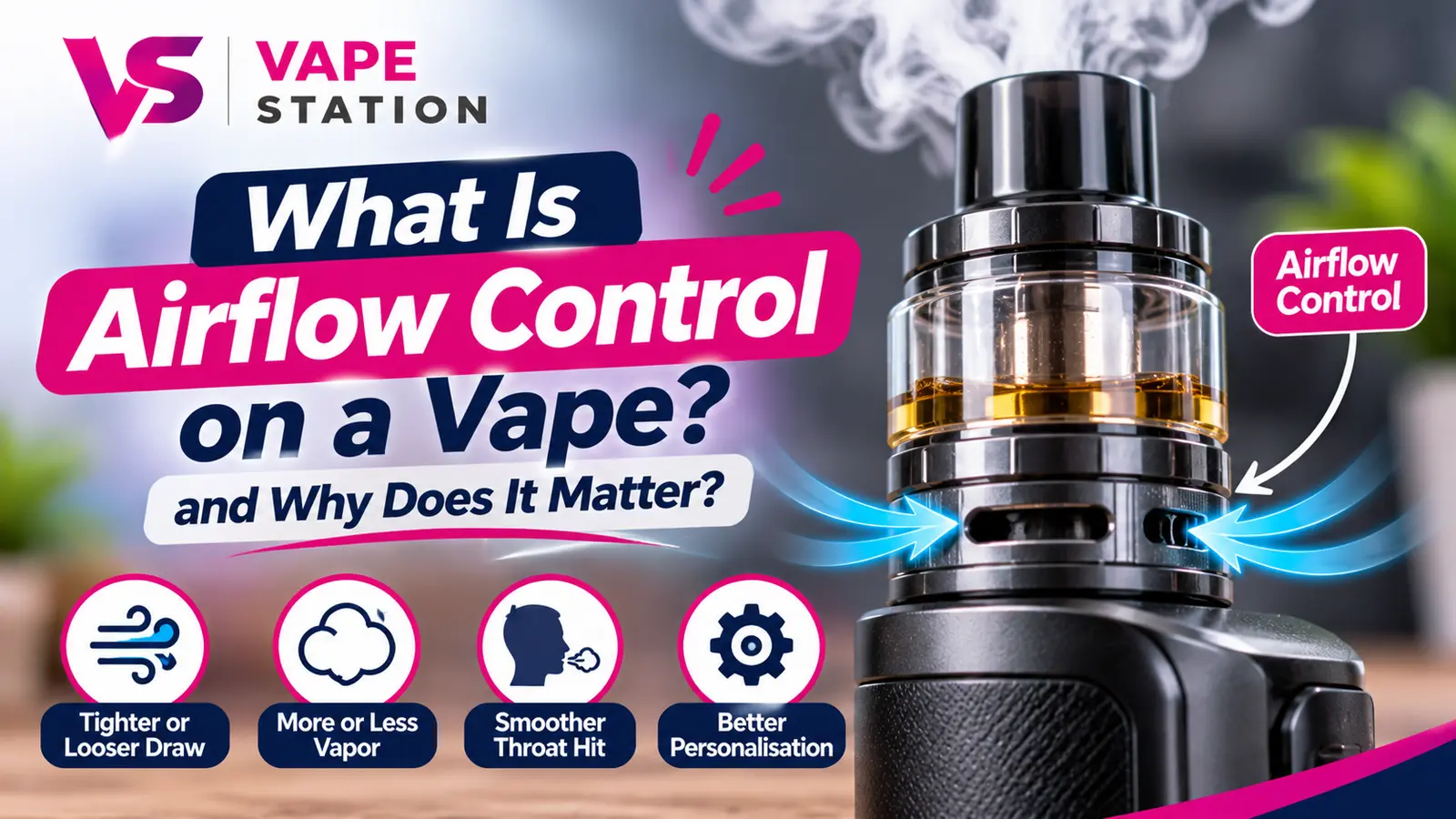
Each adjustment affects several parts of the experience at once. These are the main areas to understand.
How Does Airflow Affect Vape Flavour?
Tighter airflow makes the vapour warmer and more concentrated, which often brings the flavour forward. Opening it up creates a cooler, airier draw with a lighter taste. If a vape tastes weak, closing the airflow slightly is a sensible first adjustment. The exact effect depends on the coil, power setting and device, so small changes work best.
Vapour Production
Open airflow suits direct-to-lung (DTL) setups built for larger clouds, while restricted airflow is typical of mouth-to-lung (MTL) setups, which produce smaller clouds. Coil resistance, wattage, and device design also play a part, so choose a level that suits your preferences and surroundings.
Throat Hit
A tighter draw concentrates the vapour and can make the throat hit feel more pronounced, while more open airflow usually feels cooler and smoother. Nicotine strength, PG/VG ratio, coil and power settings also affect throat sensation, so airflow is only part of the picture.
Warmth
Restricted airflow makes vapour feel warmer, while more open airflow creates a cooler draw. Some vapers find a warmer draw more satisfying, while others prefer the refreshing feel of a cooler one. The coil and power setting also affect temperature, so the right balance comes down to personal preference.
E-Liquid Use
More open airflow often goes hand in hand with higher-output DTL setups, which use more e-liquid. Tighter airflow is more common on lower-output MTL setups, which use less. Airflow alone does not set consumption, though, as coil resistance, power, puff length, and frequency all play a part.
Draw Feel
A tight draw feels closer to the restricted pull of a cigarette, while a looser draw feels airier and freer. Which one feels more comfortable comes down to personal preference and the device.
Compare adjustable devices at Vape Station and buy vape kits online with the airflow control you prefer.